
Lead Services
Lead Inspections and Risk Assessments
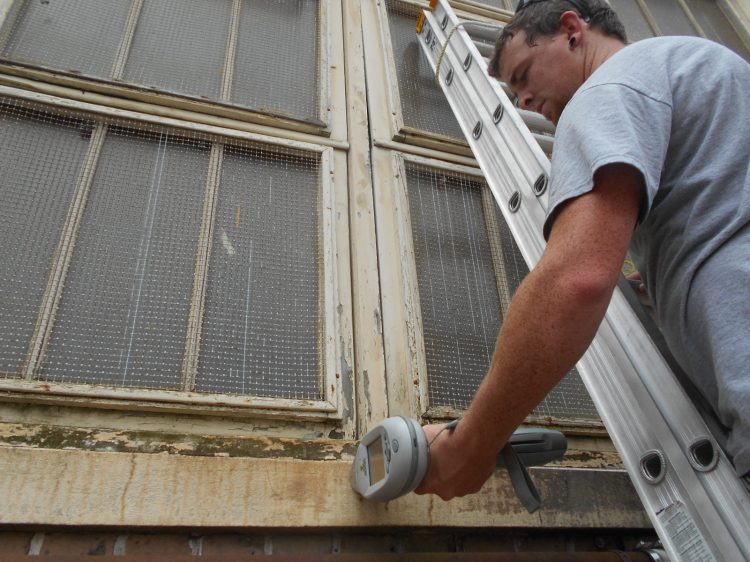
MMG’s LDEQ-Certified Lead Inspectors and Lead Risk Assessors are able to perform combination lead-based paint (LBP) inspection and risk assessments in a manner consistent with commonly accepted regulatory standards. Paint testing for risk assessments, per HUD Guidelines, requires that deteriorated painted surfaces as well as intact paint on friction, impact, and/or chewable surfaces be tested for lead. Paint testing for a LBP inspection includes the representative testing of all accessible painted surfaces beyond those designated by the HUD/EPA risk assessment guidelines. By combining measurements of lead in dust and soil with a surface-by-surface paint analysis, LBP hazards can be identified and addressed in a comprehensive fashion. MMG will determine the relative levels of risk based on the test results of the various matrices and provide recommendations for interim control and abatement strategies.
Lead Hazard Clearances
Once the lead hazard control work has been completed, MMG’s LDEQ certified Inspectors and Risk Assessors mobilize on-site to conduct the clearance examination. The clearance examination is designed to ensure all lead hazards documented in the LBP inspection and/or risk assessments have been rectified and that no hazards remain in or around the work area. This is accomplished through a visual inspection, in which all hazards previously identified are confirmed as being mitigated according to the specification. Dust wipe samples are taken in areas where dust-lead hazards were previously identified, as well as in all areas where lead hazard reduction work was conducted. If necessary, soil samples will be collected.
OSHA Compliance Monitoring
MMG’s Certified Lead Inspectors and Lead Risk Assessors can collect air samples to detect the presence and quantity of lead dust. Prior to the start of abatement work, baseline lead air samples will be taken from locations around the proposed work areas. During the lead abatement project, daily air samples for lead will be collected from various locations surrounding the work area in order to determine if the air quality outside the containment areas were compromised. Ambient air monitoring samples will be collected each day that active abatement work is performed. Samples will be analyzed by an appropriately accredited laboratory for analysis and the results will be compared to the relevant OSHA standards.
Lead in Water
MMG’s certified Lead Inspectors and Risk Assessors can collect drinking water samples using the protocols and recommendations outlined in the U.S. Environmental Protection Agency (USEPA) document “Suggested Directions for Homeowner Tap Sample Collection Procedures” or “Sampling for Lead in Drinking Water in Nursery Schools and Day Care Facilities”.
 Materials Management Group, Inc.